

for New clients:
Begin with a consultation and a 15 min electrolysis treatment.
The consultation includes an overview of the electrolysis process, hair growth cycles and what to expect.
The 15 min treatment allows the electrologist to assess hair density and structure, as well as skin sensitivity. With this information an individualized treatment plan can be created.

What causes excess hair growth?
Heredity, stress, hormonal changes, underlying medical conditions and certain medications can all cause excess hair growth.
Additionally, sometimes the hair growth is normal, but physically and/or emotionally distressing.
There are many possible causes of excess hair growth:
Hirsutism is excessive coarse hair growth in females in areas where hair is typically minimal. Usually related to a hormonal imbalance.
Hypertrichosis is excessive hair growth anywhere on the body and can occur in both males and females.
Paradoxical Hypertrichosis is stimulation of hair follicles causing hair growth that appears more dense or appears in new areas after laser hair removal. It can also be caused by certain medications or medical conditions.
Normal hair growth can also cause discomfort or unhappiness when it doesn’t align with how you feel or see yourself.
Regardless of the cause, if you’re bothered by unwanted hair, you do not have to live with it!

about Hair Cycles
Hair is in a constant process of growth, transition and rest.
Hair growth occurs in phases and at different rates based on the area of the body.
Not all hairs are in the same phase at the same time. This is why it takes repeated visits to clear an entire area.
Hair is always in one of three stages of growth:
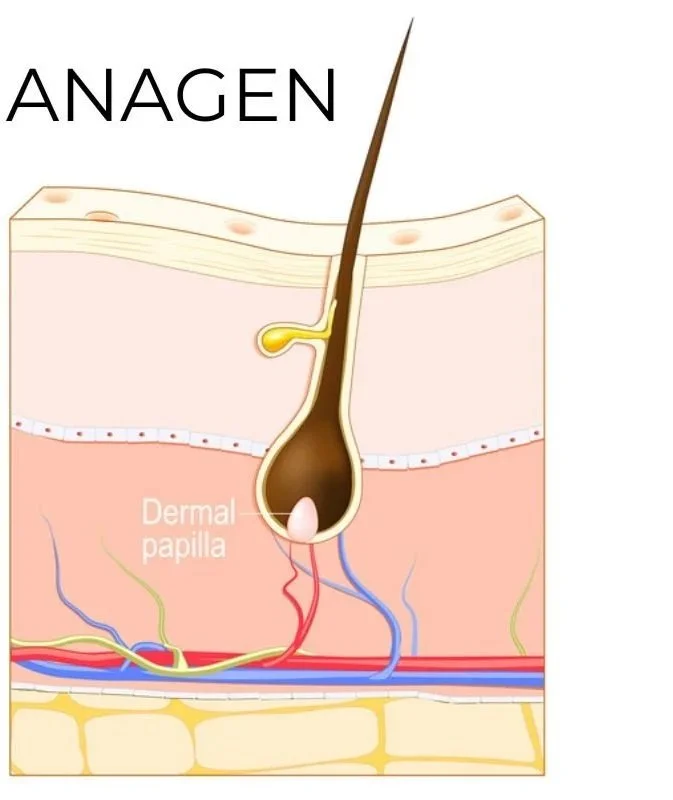
Growth Phase
Hair is connected to the blood supply in this period of active growth. Hair is at its greatest depth at this stage and thus in the most ideal phase for electrolysis treatment. It is important to maintain regular appointments so that we can treat hair in this stage before it begins to separate from the blood supply.
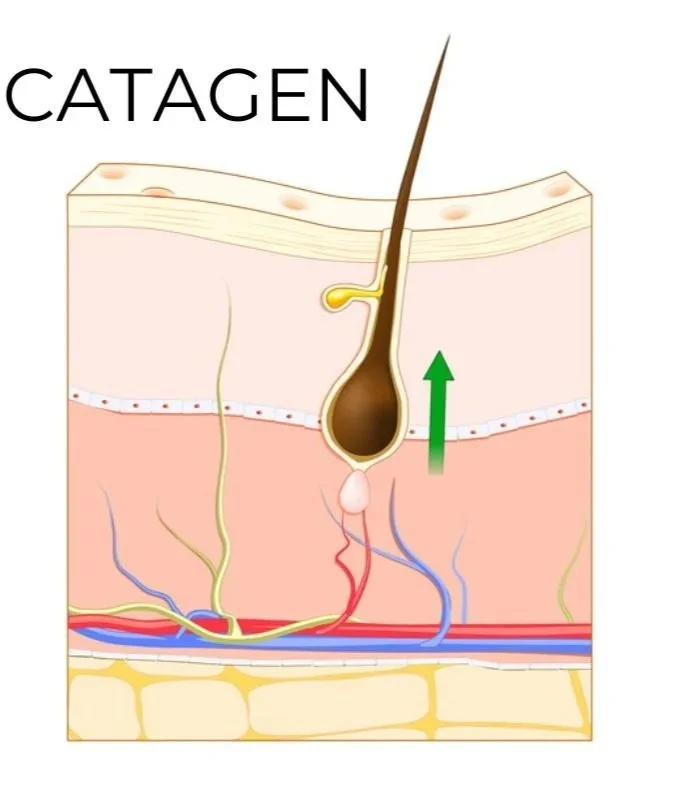
Transition Phase
The hair is separating from the blood supply and no longer growing in this stage. Hair treated in this stage will be damaged with electrolysis, but will probably regrow as a weaker, finer hair. Regular appointments will keep these damaged hairs from repairing themselves.
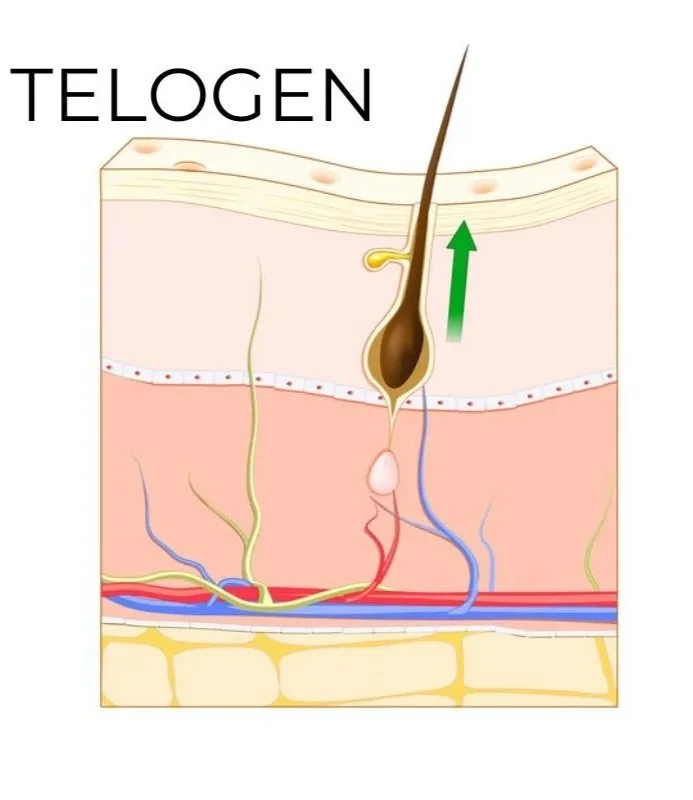
Resting Phase
The hair rests in the follicle, disconnected from the blood supply, until it is pushed out by the growth of a new hair. Hair treated in this stage will be damaged with electrolysis, but will regrow. Regular appointments will keep these damaged hairs from repairing themselves.
What is Electrolysis hair removal?
Electrolysis is recognized as the only permanent method of hair removal and is approved by the FDA and AMA.
Electrolysis can permanently remove hair of any color, including black, brown, white, gray, red and blond and it is effective and safe for any skin tone.
Electrolysis is not a new technology
It’s been around since 1875 when Dr. Charles E. Michel, an ophthalmologist, first used electrolysis for the removal of ingrown eyelashes. He was also the first to encourage its use in removing unwanted hair from other body parts.
While the basic premise of electrolysis remains the same the technology, equipment and training of electrologists has drastically modified the process.
HOW DOES ELECTROLYSIS WORK?
Your electrologist will select one of three electrolysis modalities based on what will work best for your hair and skin.
Electrolysis Modalities
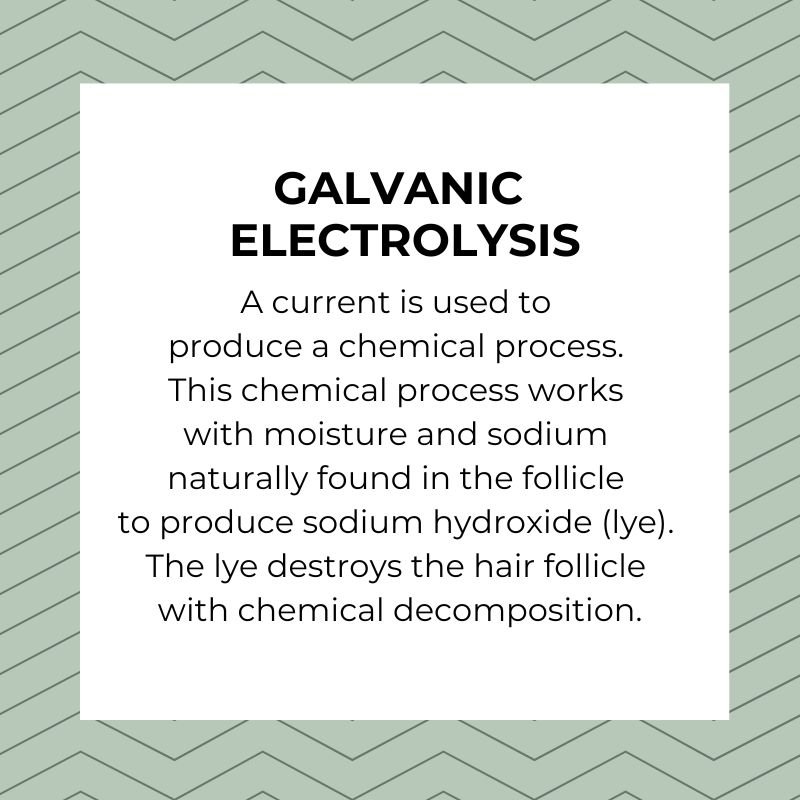
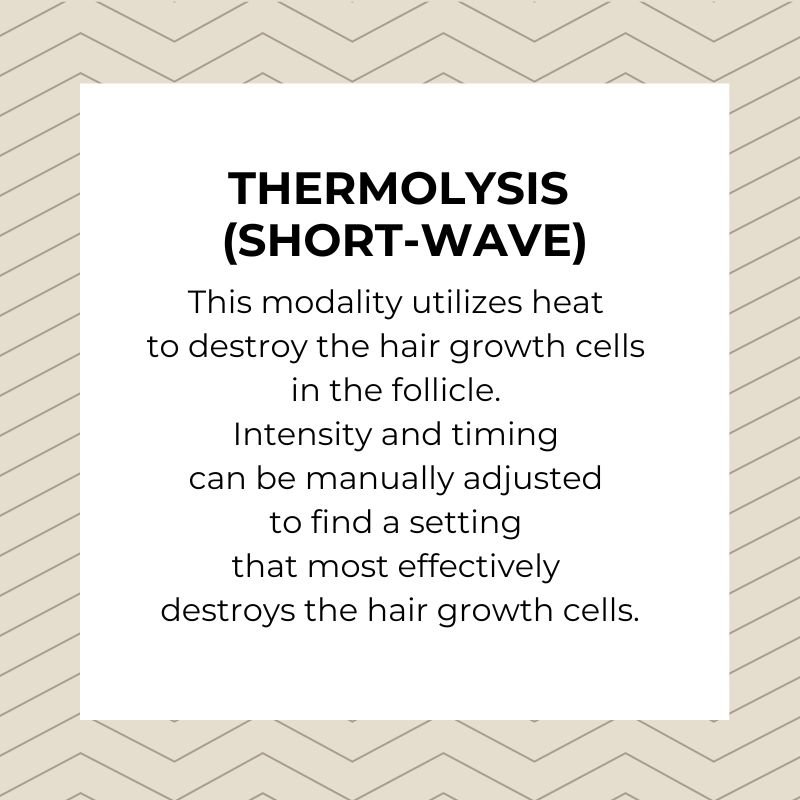
Modern medical electrolysis devices destroy the hair growth cells with chemical energy, heat energy or both.
The method chosen by the electrologist is the modality. All are effective and deliver permanent results.
The three modalities in current use are:

The electrolysis Process
-
A sterile, pre-packaged, disposable probe is inserted into the natural opening of the hair follicle. It does not pierce the skin.
Based on the modality being used, low level electric current, chemical reaction or a combination of the two is applied. This damages the hair growth cells and the blood supply to the follicle. Most hairs will require more than one treatment, but when the process is complete, the treated follicle will never regrow a hair.
After the treatment sterile tweezers are used to remove the hair. There may be a slight sensation as the hair releases but with proper timing, intensity and accuracy the hair should release without resistance.
-
There will be some discomfort. Most people describe the feeling as either a pinch or sting.
The amount of discomfort you feel will depend on individual pain tolerance, the sensitivity of the area being treated and the settings used.
-
Tips to minimize discomfort during treatment:
Avoid caffeine prior to your appointment
Maintain good hydration by staying consistently hydrated
Apply over-the-counter numbing cream if needed
You’re welcome to use headphones during treatment!
BEFORE & AFTER CARE
Proper care before and after treatment helps minimize irritation and supports the best possible results.
Before Your Appointment
-
HYDRATE
Hydration helps with your comfort during treatment and keeps the follicles hydrated for a more effective treatment. Please do not skip this step.
PREPARE YOUR SKIN
Clean and moisturize skin. Using gentle, non-abrasive exfoliation the day before also helps prepare the skin and hair.
If you are receiving treatment on your face, please remove heavy makeup prior to your appointment.
HYGIENE
Please arrive in good hygiene.
-
PREPARE YOUR HAIR
The hair must be visible for treatment. Please allow sufficient hair growth for your appointment. Hair needs to be long enough to be easily grasped by tweezers, at least ⅛” long. This may require a few days, or up to a week of growth depending on how fast your hair grows.
If your hair is too short, the appointment will need to be rescheduled and there will be a charge for the reserved time. Letting the hair grow can be a difficult part of the process initially, but will be worth it when you start to see the results!
-
AVOID SUN EXPOSURE
Avoid heavy sun exposure 24-48 hours prior to your appointment. Sunburned skin can’t be treated.
BE HONEST
Please let us know of any changes in medication or medical history so that we can provide you with the safest treatment.
PAIN RELIEF OPTIONS
Maintain good hydration
Apply a topical numbing cream prior to your appointment (use as directed)
Avoid caffeine prior to appointment
Stress and Menstruation can increase sensitivity in some cases
You’re welcome to use headphones during your treatment!
ALSO AVOID
Avoid all Retinoids and Acid Serums in the treatment area during the treatment process. These products are drying, making the hair more difficult to treat. They may also cause increased skin irritation and lead to scarring.
after Your Appointment
-
It is normal to experience some redness, bumps, swelling and a stinging sensation after treatment. Typically, symptoms resolve in a few hours up to a few days.
You may also experience scabbing, pustules, pigment spots and bruising. Do not pick or squeeze as this can increase the chance of infection and scarring. At your next appointment let your electrologist know how your skin reacted post treatment so that adjustments can be made to minimize negative reactions.
Please text 704-458-1686 if you have any concerns after treatment.
-
DON’T TOUCH
Avoid touching the treated area. Bacteria from fingers can cause breakouts, irritation and infection.
Avoid make up and heavy creams that may clog the pores.
If you do experience scabbing or pustules, please do not pick or squeeze.
DON’T SWEAT
Avoid activities that cause excessive sweating for 24 hours after treatment. Sweat can increase the likelihood of skin irritation and infection.
AVOID SUN EXPOSURE
Stay out of the sun for at least 24 hours and then use sunscreen. Sun exposure increases the likelihood of hyperpigmentation.
-
Apply Witch Hazel, Aloe Vera and ice to soothe the skin. A cold compress can help to minimize swelling and cool the skin.
BETWEEN APPOINTMENTS
-
Doing nothing to the hair is ideal, but not always possible. It is ok to gently shave or trim the hair.
-
Never tweeze, wax, thread, bleach, dermaplane, sugar or use any other temporary methods of hair removal during your treatment process.

How Long will it take?
Electrolysis is a process over time, and the length of treatment varies based on individual factors. Most clients achieve permanent results within 1–3 years when following a consistent treatment plan.
-
Individual factors play a significant role in the length of the treatment process:
hair structure and density
growth cycles
hormones
previous methods of hair removal
pain tolerance
budget
schedules
-
Electrolysis takes TIME.
While it’s impossible to predict exactly how long the process will take due to individual factors, most people reach permanence within 1 to 3 years. The timeline depends on adherence to the recommended treatment plan and instructions.
-
Please respect the follow up appointments to avoid giving hair growth cells an opportunity to regenerate and extend overall treatment time.
The timeline depends on adherence to the recommended treatment plan and instructions.
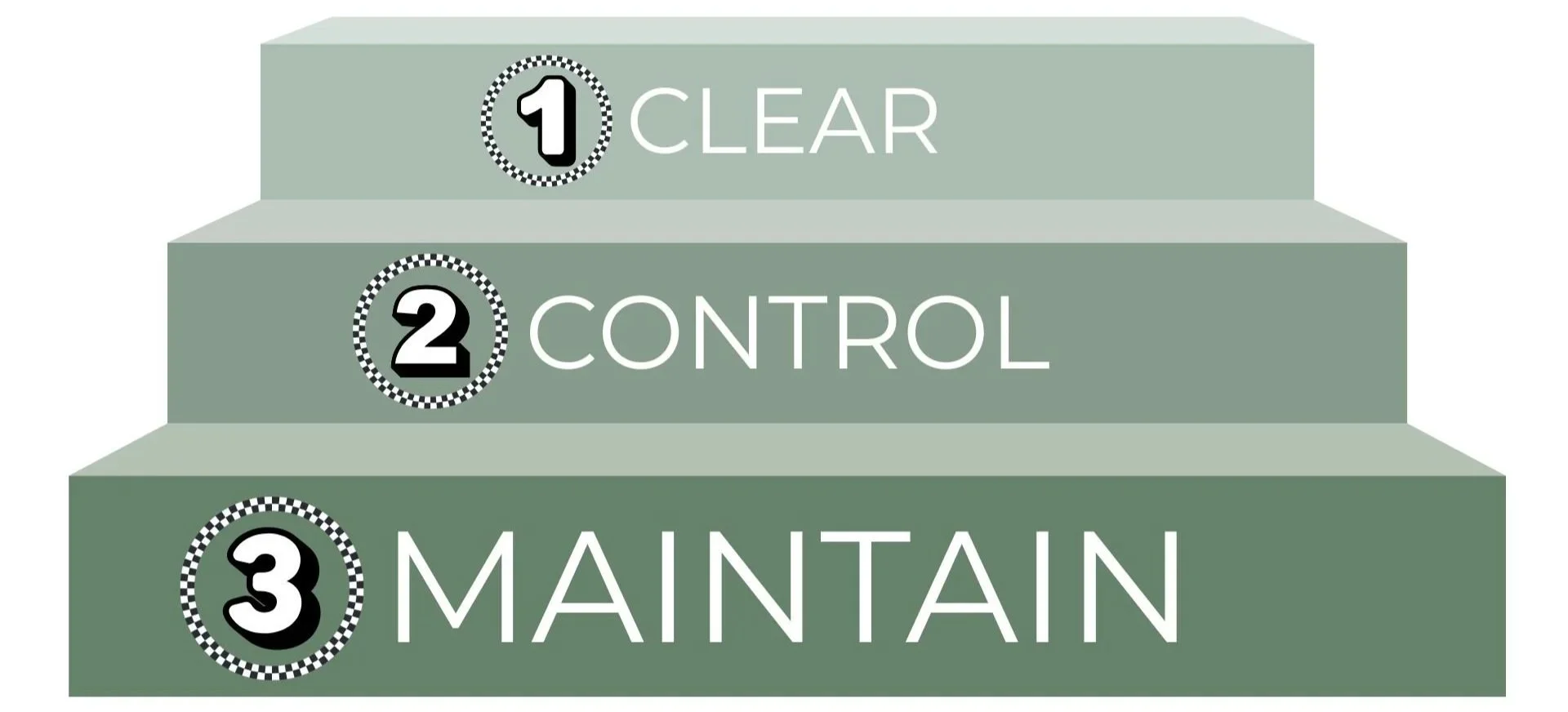
Clear
The goal during this step is to achieve a first clearance where every hair is treated for the first time. The first clearance consists of multiple treatments.
Treatment: Hair that an electrologist can treat during one appointment.
Clearance: The treatment of EVERY hair in a treatment area.
It takes approximately 90 days for a single hair to regenerate and regrow. During the first 90 days of treatment all the hairs in the treatment area will be visible. The clearance phase is a minimum of 90 days but could be longer depending on individual factors.
At the end of the clearing step you will begin to see a noticeable reduction in hair growth.
2. Control
The goal during this step is to treat regrowth from the initial clearance. Treatments will continue to break down the hair structure destroying the remaining hair growth cells. You will notice finer, weaker hair and an overall reduction. Respect the follow up appointments during this time to avoid giving hair growth cells an opportunity to regenerate.
Regrowth: Hair that has already been treated one or more times.
The control step takes anywhere from 1-3 years depending on individual factors.
3. Maintain
The goal during this stage is to continue to treat the few remaining, persistent hairs. Less frequent and shorter appointments will be needed.
Hair permanently destroyed with electrolysis will not regrow.
However, there is always a possibility that a change in health status, hormone levels or medications, may stimulate growth from previously dormant hair follicles. This means you may need touch-up appointments over time.
TIPS FOR SUCCESS:
Commit to the treatment plan
Do not tweeze, wax, thread, bleach, or use depilatories between treatments
Doing nothing to the hair between appointments is preferred. If it’s necessary to remove the hair between appointments please trim or gently shave.